 Skip to content



The furnace is running, you can hear the blower, but what reaches the vents is cool or room-temperature instead of heat. On a cold Mentor night, that is unsettling, and it leaves you wondering whether the problem is simple or needs professional attention. The causes of a furnace blowing cold air can range from a thermostat setting you can check yourself to restricted airflow, an ignition issue, or a sensor fault that needs service. This guide walks through the patterns in order so you can narrow down what may be happening and know when to call for help.
A furnace blowing cold air usually comes down to a few things. The thermostat fan may be set to ON instead of AUTO, the filter may be restricting airflow, the burner may be shutting down after a failed flame signal, or the furnace may have locked out after an ignition problem. Start with the thermostat and filter because both are safe homeowner checks. If those look normal, the next step is professional diagnosis rather than opening the burner compartment.
Is Your Thermostat Fan Set to ON Instead of AUTO?
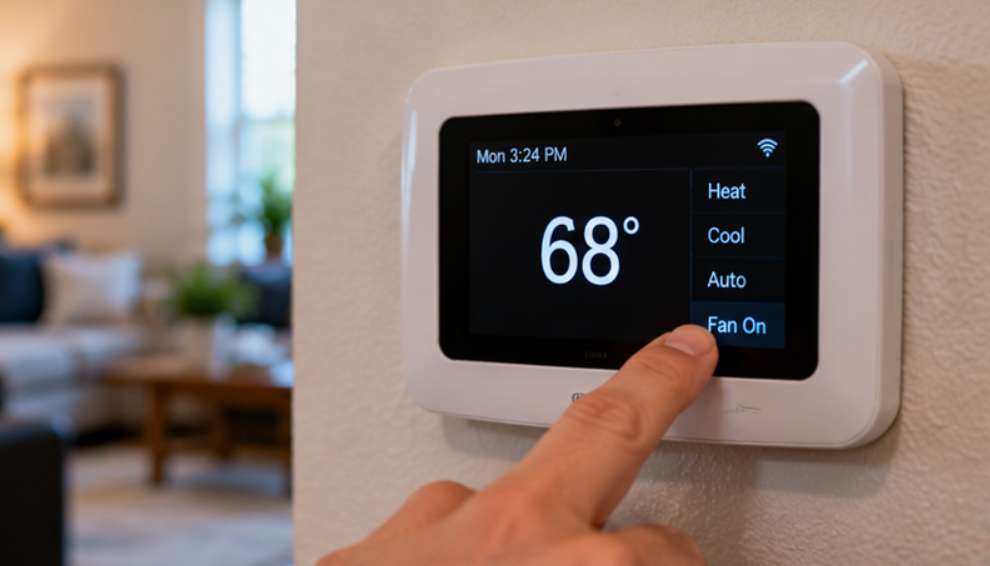
Start here: it’s the cheapest cause and costs nothing to rule out. Most thermostats have a fan setting with two positions, ON and AUTO. On AUTO, the blower runs only when the furnace produces heat. On ON, it runs constantly, whether or not the burner is lit.
The blower assembly sits inside the furnace cabinet and operates separately from the burner. That distinction matters. With the fan set to ON, the blower can continue moving room-temperature air through the ducts between heating cycles, which can feel like the furnace has stopped heating even when the burner is simply off.
Switch the fan to AUTO and watch. If the vents go quiet until the next heat call and then deliver warm air, you’ve solved it for free. If air still comes out cold while the furnace is clearly calling for heat, the setting wasn’t the problem, and you move to the warm-then-cold pattern below.
That split matters more than anything else you’ll check. Air that’s cold from the first second points one direction; air that starts warm and turns cold points another. Noticing which pattern you have narrows the whole thing down before anyone opens a panel.
Why Does the Furnace Blow Warm Air Then Go Cold and Shut Off?
Warm air that turns cold and then stops is a short-cycle pattern, and it has a handful of likely causes. Here they are, ordered from the cheapest and easiest to rule out toward a real repair.
A Dirty Flame Sensor Shutting Down the Burner
A dirty flame sensor is a common cause of the warm-then-cold pattern. The burner lights, but if the sensor does not confirm the flame, the control board shuts off the gas as a safety response. The blower may continue briefly, which is the burst of cooler air you feel before the system stops. The next section explains why that happens.
A Furnace Locked Out After Failed Ignition
If the furnace tries to light and cannot, the control board may stop further ignition attempts and enter a lockout. The lockout itself is a safety response, but the condition triggering it can still be a real equipment or ignition fault. Some systems reset after power is cycled, but repeated lockouts should be diagnosed instead of repeatedly reset.
A Clogged Filter Tripping the High-Limit Switch
A severely clogged filter can restrict airflow enough for the heat exchanger to overheat and the high-limit safety switch to shut the burner down. The blower may keep running, so the vents feel warm at first and cooler afterward. Replacing a dirty filter may resolve the problem if restricted airflow is the cause, but repeated limit trips still need service.
If the sensor and filter check out and it still short-cycles, the fault may sit in the control board or gas valve, which is where a furnace repair visit earns its keep. Those are not homeowner parts. Knowing which pattern you have is what tells the technician where to start.
What Does a Dirty Flame Sensor Do, and Why Is It So Common?
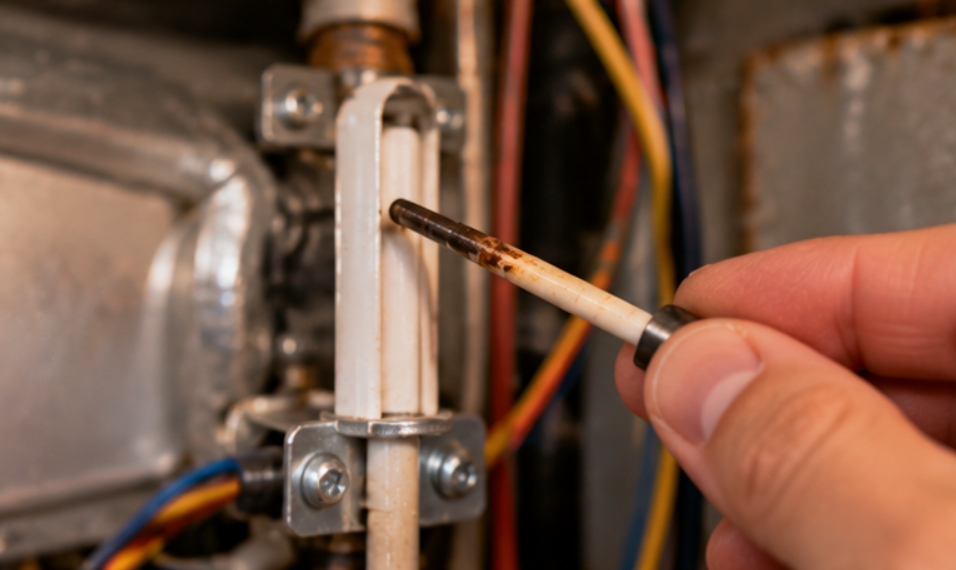
A flame sensor is a thin metal rod positioned in the burner flame. It uses flame rectification to create a tiny electrical signal that tells the control board the burner is safely lit. If that signal is not detected, the board shuts off the gas within seconds, which can produce a brief warm burst followed by cooler air.
Over time, oxidation or residue can interfere with that signal even when the burner initially lights. That buildup can show up during the first heavy use of heating season. Cleaning or replacing the sensor is typically a technician-level repair and is one of the common checks during a furnace service call.
Flame sensors are used on gas-fired furnaces, not heat pumps. If your home uses a heat pump, the troubleshooting path is different and may involve airflow, controls, defrost operation, refrigerant, or other system components. For a gas furnace, the flame sensor is one of the common ignition-safety components a technician may inspect early in the diagnostic process. Learn more about heat pump repair if your home uses a heat pump instead.
Why Does This Happen at the Start of Heating Season?
The timing can be a clue. After a long summer shutdown, the furnace may be running for its first sustained stretch since spring. That first heavy heating demand can expose airflow restrictions, ignition issues, or components that need cleaning or service.
Several things line up to surface at that first startup:
- A flame sensor coated over the summer, blocking the current on the first ignition attempt
- A filter clogged since spring, restricting airflow before the heating load ever arrives
- Dust burning off a cold heat exchanger, which smells briefly and is normal
- Settled debris and spider webbing in the burners from months of idle time
- A furnace that was fine in April and degraded sitting still, not in use
So the timing can work as a diagnostic hint. If the furnace heated normally last winter but blows cold during the first sustained heating cycle of the season, start with the simple checks first. A thermostat setting or dirty filter may be involved, but an ignition or safety-control issue is also possible if the problem continues.
What Can You Check Yourself Before Calling?
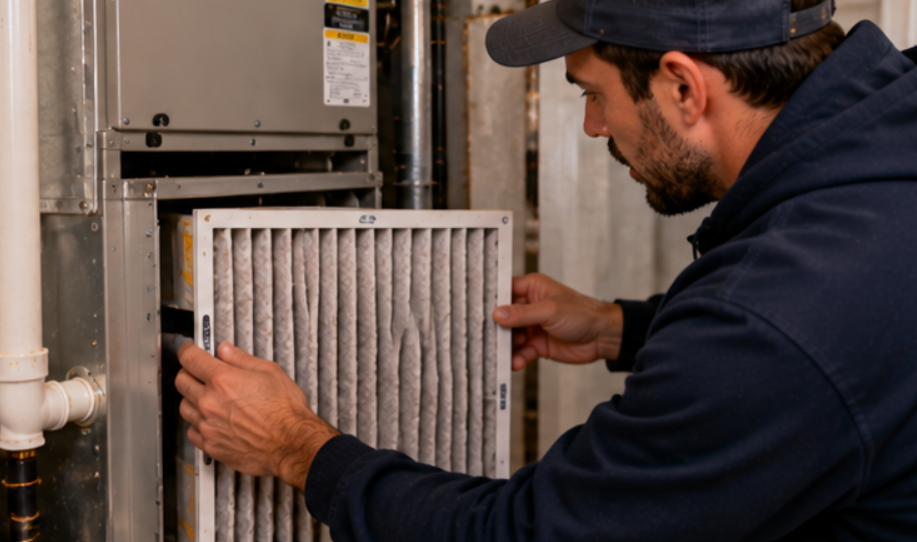
There is a clear line between safe homeowner checks and furnace repairs. Thermostat settings, filters, breakers, vent obstructions, and a basic visual check are reasonable to review. Gas components, burner assemblies, the heat exchanger, and internal electrical testing should be left to a trained technician. Start with the simple checks, then stop if the system still will not heat correctly.
Before you pick up the phone, these are the checks that are safe and often decisive:
- The thermostat fan setting, moved from ON to AUTO
- The air filter, checked regularly and replaced according to the filter manufacturer’s guidance; many basic filters need attention every 1 to 3 months
- The breaker labeled for the furnace, reset once if it has tripped
- The vents themselves, confirmed open and unblocked by furniture or rugs
- The thermostat batteries, if it is a battery model that has gone blank
Seasonal HVAC maintenance can also catch small issues before heavy use. Cooling equipment is typically checked before summer, while a furnace maintenance visit before winter can identify a dirty sensor, restricted filter, or other heating issue before the first cold stretch.
| What you notice | Likely cause | Why it points there |
|---|---|---|
| Cold air constantly, fan never stops | Fan set to ON | Blower runs separate from the burner, moving unheated air |
| Warm then cold, then shuts off | Dirty flame sensor | Flame not confirmed, gas cut as a safety step |
| Warm then cold, filter is gray | Clogged filter | Restricted airflow trips the high-limit switch |
| Furnace completely dead | Tripped breaker | No power to igniter, controls, or blower |
If the thermostat and filter both check out and the furnace still will not heat, you have done the useful part yourself and ruled out the free fixes. What remains belongs to a technician, and the next question is simply how soon.
When Is Cold Air From the Furnace an Emergency?
Cold air from the furnace becomes urgent when the system cannot maintain safe indoor temperatures, repeatedly fails to ignite, or shows signs of a gas or venting problem. If the home is losing heat quickly during freezing weather, arrange service promptly rather than waiting for the system to fail completely.
Stop using the furnace and get immediate help if you smell gas, see soot around the equipment, suspect venting problems, or hear repeated ignition attempts without a stable flame. If you smell gas, leave the home and contact the gas utility or emergency services from a safe location.
If the furnace still produces some heat but cycles irregularly, schedule service as soon as practical. Intermittent heating can still point to an airflow, ignition, or safety-control issue that should not be ignored.
Why Choose Buckeye Comfort Solutions for Furnace Repair in Mentor?
When your furnace blows cold air instead of heat, the cause could be something as simple as an incorrect thermostat setting or a dirty flame sensor, or it could involve a failing component that needs professional attention. Our team helps homeowners in Mentor and surrounding Northeast Ohio communities identify heating problems and determine the right solution.
If your furnace won’t produce consistent heat, our furnace repair services can help diagnose the issue and restore reliable operation. If your existing system is aging, requires frequent repairs, or no longer meets your home’s heating needs, explore our furnace installation services to discuss replacement options. Don’t wait for a complete heating failure during an Ohio cold snap. Call 440-664-2827 to discuss your furnace problem and schedule an evaluation.
Frequently Asked Questions
Why is my furnace blowing cold air even though the thermostat is set to heat?
Your furnace may have an incorrect thermostat setting, a dirty flame sensor, restricted airflow, or an ignition problem. First, confirm the thermostat is set to HEAT and the fan is on AUTO. If the furnace continues blowing cold air, arrange a professional inspection to identify the underlying cause.
Can a dirty furnace filter cause cold air to come from the vents?
Yes. A severely clogged filter can restrict airflow, causing the furnace to overheat and activate its high-limit safety switch. The burners may shut off while the blower continues circulating air. Check the filter and replace it if dirty. If the problem continues, have the system inspected.
Why does my furnace start heating but then switch to cold air?
If your furnace starts producing warm air but quickly switches to cold, it may be overheating, experiencing restricted airflow, or losing its flame signal. A dirty flame sensor can cause the burners to shut off shortly after ignition. Repeated shutdowns require professional diagnosis rather than repeated restarts.
How long should a furnace take to blow warm air after starting?
Most furnaces need a short startup period before delivering warm air because the ignition sequence and heat exchanger must warm up first. A brief delay is normal. However, if the vents continue blowing cold air for several minutes or the burners repeatedly shut off, the system may need inspection.
Is it safe to keep running a furnace that blows cold air?
It depends on the cause. If the furnace repeatedly fails to ignite, shuts down, or produces unusual smells or sounds, turn it off and arrange professional service. If you smell gas, leave the home and contact your gas utility or emergency services from a safe location.


